Two Transitions. One Shared Truth: Hormones Shape Midlife. How they differ:
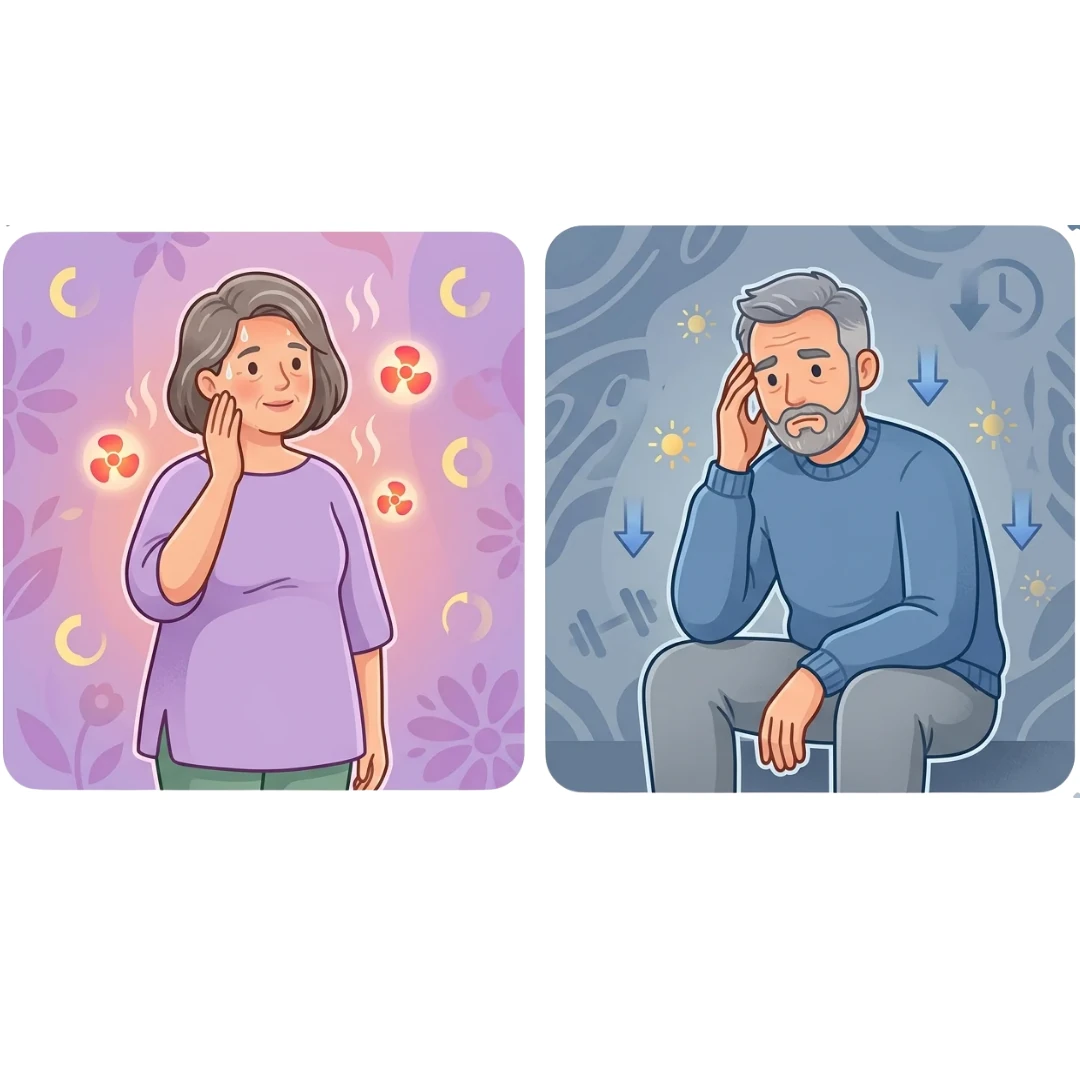
Menopause
- Happens to women, usually between ages 45–55
- Marked by 12 months without a period
- Estrogen + progesterone drop sharply
- Common signs: Hot flashes, night sweats, brain fog, mood swings, vaginal dryness
- Fertility ends
Andropause
- Happens to men, usually from age 40+
- No clear “event” — testosterone declines ∼1–2% per year after 30
- Testosterone drops slowly over decades
- Common signs: Low energy, irritability, low libido, loss of muscle, brain fog, erectile changes
- Fertility reduces but can continue
What’s the Same?
- It’s biological, not personal — Hormone shifts impact mood, sleep, weight, confidence, and relationships for both sexes.
- It’s often misunderstood — Most people weren’t taught what to expect. Symptoms get blamed on “stress” or “aging.”
- It affects identity — Beyond physical changes, both phases can trigger questions about purpose, attractiveness, and self-worth.
Why Talking About Both Matters ?
Menopause has finally entered public conversation. Andropause hasn’t. Yet both deserve awareness, support, and tools — because untreated hormone shifts impact families, workplaces, and mental health.
This Isn’t a Decline. It’s a Transition. With knowledge, lifestyle shifts, and emotional support, midlife becomes a chapter of strength and clarity — not crisis.
At Wise Ttalks , we help men going through andropause and women going through menopause navigate these shifts with evidence-based therapy, so you move through midlife with calm, confidence, and control.